Programming is not dead: the future of development belongs to children
Discover how AI is removing technical barriers, allowing a new generation to create technology without needing to master complex syntax.
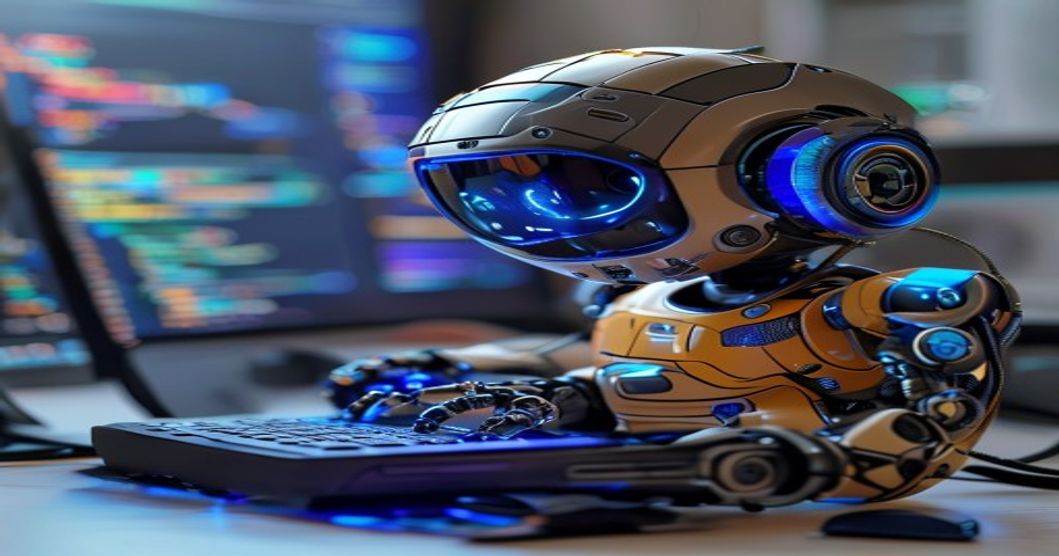
The end of the entry barrier in programming
For years, access to the software development world was restricted by a steep learning curve. Learning syntax, managing environments, and dealing with cryptic errors was the rite of passage. However, a recent experiment with the M5Stack Core2 device has shown that we are facing a paradigm shift: programming is no longer about writing code, but about defining visions.
When my 10-year-old son, Justus, decided that his digital pet needed "life"—the ability to eat, sleep, and socialize—we didn't turn to learning manuals. We used AI as a mentor that translated his creativity into reality. If you want to delve deeper into how we are changing the way we interact with code, you can check out our article on Assisted Programming: How to decode the new language of AI.
A professional workflow with AI
The project, dubbed Pixel-Pets, was no minor game; it was structured like a real tech startup. Justus took on the role of Product Owner, defining biological needs and user experience, while I acted as a technical facilitator, managing prompts and hardware constraints.
What AI taught us about development
The most surprising thing was not the AI's ability to generate functions, but its technical competence in critical areas:
- Linux Administration: The AI navigated Linux environments fluently, configuring services and network settings on the first try.
- Vision to C++ code: The model was able to analyze the image of a physical toy and translate its features into graphic logic for the device's screen.
- Stable iteration: Unlike traditional programming, where one change can break the entire structure, the AI maintained code integrity while we refined details like the size of the ears or the character's features.
"The definition of 'Maker' is changing. The barrier to entry is no longer the struggle of learning syntax; it is the ability to guide an AI with logic and a clear vision."
Democratizing technology with Open Source
What started as a Sunday afternoon turned into a complete ecosystem of open source devices. From pets with local models (no cloud needed) to companion devices that communicate via ESP-NOW, the project demonstrates that the distance between an idea and a real product is shorter today than ever before.
Although we still use javascript for interface logic in many web projects, in this case, the AI's ability to manage the firmware and limited hardware resources was the key to success. In a world where AI handles the friction, young creators can focus on what really matters: creativity and user experience.
The era of the lone developer fighting the compiler is giving way to an era of idea architects. The next generation will not just learn to program; they will learn to build worlds.
Related articles
30 de septiembre de 2026
Direct API vs. SDK: Security in Password Recovery
Optimize password recovery in fintech: Direct API or SDK. We analyze pros, cons, and the best programming strategy.
23 de septiembre de 2026
How to deploy Typebot: The open-source chatbot builder
Learn how to deploy your own instance of Typebot, the open-source tool for creating conversational forms with full data control.
16 de septiembre de 2026
CetinLM: The Revolution in Programming and Efficient AI
CetinLM challenges the myth that AI requires multi-million dollar infrastructure, proving that precision engineering outperforms brute force.
9 de septiembre de 2026
Mastering Microsoft Entra: An Essential Guide to the SC-900 Certification
Learn the pillars of cloud identity, from access management to Conditional Access, which are key to passing the SC-900 certification.
Loading comments...