The Grammy Crossroads: How to Regulate Artificial Intelligence?
Harvey Mason Jr., CEO of the Recording Academy, analyzes how AI is redefining music production and the future of the Grammy Awards.
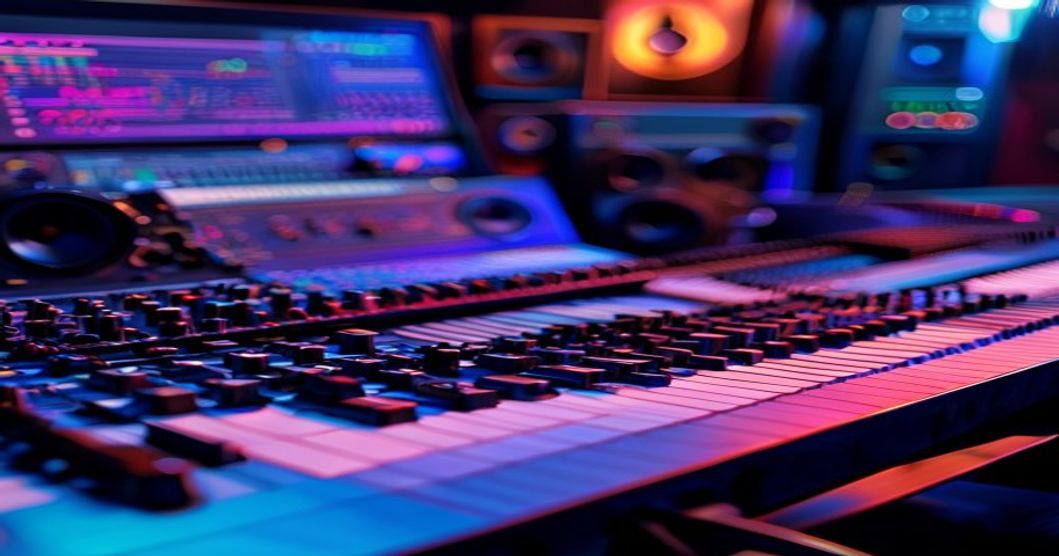
The omnipresence of technology in the studio
Just 18 months ago, the conversation surrounding artificial intelligence in the music industry centered on uncertainty. Today, according to Harvey Mason Jr., CEO of the Recording Academy, the reality has changed radically: AI is omnipresent. From creating chord progressions to generating backing vocals, producers are integrating these tools into every creative session. It is a phenomenon that, much like we discussed in Rivian y el futuro de la inteligencia artificial en el automóvil, is transforming the foundations of a creative industry.
The dilemma of authenticity versus efficiency
The current challenge is both technical and ethical. Platforms like Suno have democratized composition, allowing any user to generate complete tracks with a simple prompt. However, this ease of access raises a fundamental question: what constitutes artistic value? Mason admits to having mixed feelings:
"It disturbs me that people who haven't spent years honing their craft can create art via a command, but as a leader, I must balance the preservation of human creativity with inevitable technological evolution."
How will the Grammys manage AI-generated content?
The Recording Academy has implemented a strict policy: to be eligible for a Grammy, there must be a "more than minimal" amount of human creativity in the work. While using machine learning tools to assist in the process does not automatically disqualify an artist, the interpretation of these rules becomes increasingly complex as LLM and audio generation models become more sophisticated.
- Transparency: The Academy requires artists to disclose the use of AI in their submissions.
- Human evaluation: Selection committees analyze cases on an individual basis, though Mason acknowledges that there is no foolproof tool to detect the exact percentage of human intervention.
- Focus on the artist: The priority remains protecting the human creator and ensuring that artistic merit is not diluted in a sea of synthetic content.
The future of the music industry
The industry is undergoing a transition similar to what it experienced with Auto-Tune or drum machines. Although the fear of AI-generated "junk" is palpable—with 50,000 new songs uploaded daily to platforms like Deezer—Mason's optimism lies in the adaptability of musicians. Much like the impact of AI on search that we analyzed in Sundar Pichai: AI, the Future of Search and the Web, music will not disappear, but its creation process will be unrecognizable in a few years.
In conclusion, the Academy is preparing to navigate this "tightrope," prioritizing the history and human effort behind every note, while seeking a legal framework that protects intellectual property against the unauthorized use of voices and images.
Related articles
26 de septiembre de 2026
Can Artificial Intelligence Save the Future of the Web?
Matthew Prince, CEO of Cloudflare, analyzes how AI is redefining the Internet's economic model and the role of bots in the new digital ecosystem.
19 de septiembre de 2026
Does Artificial Intelligence Need an Antitrust Exemption?
We examine whether Big Tech is seeking safety or simply protecting its business interests in the face of the artificial intelligence boom.
11 de septiembre de 2026
The Harsh Reality: Why Artificial Intelligence Is Facing Backlash
We analyze the growing social skepticism toward AI and the limits of automation in a world seeking control, agency, and tangible results.
3 de septiembre de 2026
Simultaneous Collapse: What the Artificial Intelligence Outage Teaches Us
ChatGPT, Claude, and Grok suffered simultaneous outages, exposing the fragility of our current reliance on large language models.
Loading comments...