The 42 Billion Dilemma: The Paralysis of European Diplomacy
The EU faces an internal blockade over suspending its trade agreement with Israel, trapped between economic interests, history, and the pressures of the conflict.
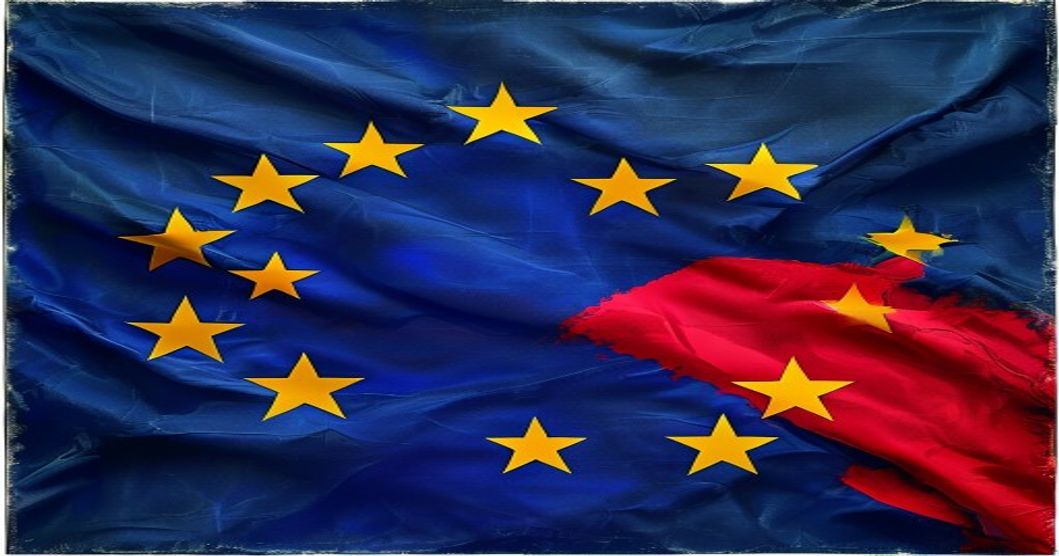
The European Union's Trade Crossroads
The European Union finds itself at an ethical and economic crossroads of significant proportions. With a trade volume exceeding 42 billion euros, the EU-Israel Association Agreement has become the center of an intense political debate. As the war continues to devastate the region, various sectors within the European bloc are demanding a review of trade ties, arguing that Israel's actions violate the human rights clauses stipulated in these treaties.
However, inaction prevails. The institutional paralysis reflects a deep fracture among member states regarding how to balance economic commitments with the moral obligations derived from international law.
Factors Behind the Blockade: Why Is Diplomacy Stalled?
The lack of consensus is not accidental. Various geopolitical and domestic factors prevent European diplomacy from adopting a unified stance:
- Economic Dependence: Strategic sectors, from technology to armaments, maintain deep ties with the Israeli industrial ecosystem.
- Historical Legacy: The weight of the Holocaust continues to shape the foreign policy of key countries like Germany, which prioritize Israel's security as a raison d'état.
- Political Fragmentation: The lack of a common foreign policy allows states with divergent views (such as Ireland or Spain versus Hungary or the Czech Republic) to block any sanctioning measures.
"The right to defense cannot be a blank check to ignore international standards," critics point out, while other countries argue that keeping channels open is the only way to exert influence on the ground.
Beyond Trade: The Humanitarian Crisis
The debate over the trade agreement does not occur in a vacuum. The situation in the occupied territories continues to deteriorate, with alarming reports suggesting dynamics of systematic violence. It is vital to analyze how these abuses, including Israeli Sexual Violence: A Tool of Displacement in the West Bank?, erode the legitimacy of bilateral relations.
Towards a New European Stance
The question that remains is whether the EU is willing to sacrifice its commercial interests for the sake of a foreign policy based on values. While diplomacy appears exhausted, the cost of inaction is measured not only in euros, but in the loss of Europe's credibility as a global actor capable of curbing the conflict and protecting fundamental human rights.
Conclusion
The 42-billion-euro dilemma is, ultimately, a test of maturity for the European Union. The ability to align its economic power with its stated principles will determine whether the bloc can play a constructive role in the future of the Middle East or if, conversely, it will remain a passive spectator to a crisis that challenges its very democratic foundations.
Related articles
27 de septiembre de 2026
Geopolitics at the pub: Ireland boycotts matches against Israel
Irish pubs are refusing to broadcast Nations League matches against Israel, turning sport into a new diplomatic battlefield.
20 de septiembre de 2026
The Pardon of Elor Azaria: A Turning Point in War and Diplomacy
The recent pardon of soldier Elor Azaria has reopened the debate surrounding military justice and the diplomatic repercussions of the Middle East conflict.
12 de septiembre de 2026
Diplomacy in the BRICS: Iran and the UAE seek de-escalation following conflict
The President of Iran and the Crown Prince of Abu Dhabi meet at the BRICS summit, marking a diplomatic milestone amidst regional instability.
4 de septiembre de 2026
Resistance in the West Bank: The Impact of Conflict in Khirbet al-Tabban
Following the mass demolition of 12 homes in Khirbet al-Tabban, residents have reaffirmed their determination to rebuild their lives on the land of their ancestors.
Loading comments...